Who is Joe & Fay Gock ?
Joe and Fay Gock are gardeners they won the bledisloe cup for gardening they began marketing after they were married in 1956. Over the years, they had to deal with many problems in their gardens. And they solved these problems in very clear ways.
They’ve never had much money, so they couldn't pay people to solve their problems. But that’s never stopped them. As Fay say’s,”if everything comes easily, you don't have to think
Joe and Fay could also be called “Citizen scientists”.Throughout their long careers, they solved many problems By:
Questioning
Collecting
evidence
Experimenting
Collecting more evidence
Applying that evidence.
Along the way, these amazing innovators invented new ways of doing things and changed the ways vegetables are grown in New Zealand.
Thursday, 25 June 2020

Wednesday, 24 June 2020
Monday, 22 June 2020
103-year-old man walks marathon to raise COVID-19 funds
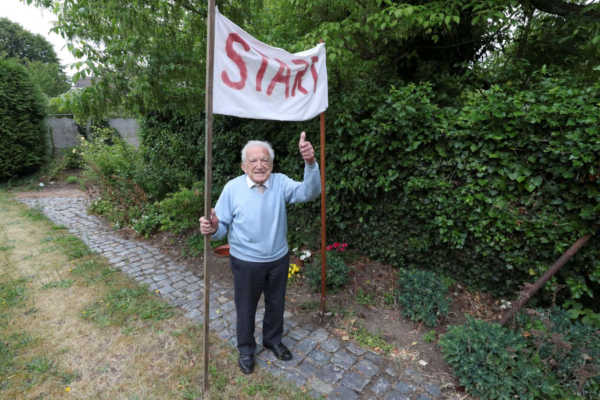
Today i read about a 103 year old man who walks a marathon to raise COVID-19 funds
A 103-year-old Belgian doctor is walking a marathon around his garden to raise money for Covid-19 research.
Alfons Leempoels, a retired general practitioner, will walk the distance in daily stages.
He started his 42.2 km journey in his home town on June 1 and plans to complete it on June 30.
Every day he walks 10 laps of 145 metres (159 yards). He does three laps in the morning, three at noon and four in the evening.
To avoid losing count, he throws a stick into a bowl every time he completes a lap.
Leempoels hopes to raise funds for the hospital attached to the nearby university of Leuven, where researchers are working to find a cure for COVID-19.
Thursday, 18 June 2020
Wednesday, 17 June 2020
Harakeke explanation writing
Aisea. K
Harakeke
The Harakeke plant is a herbaceous plant, which means its growth form is soft, but also not woody. The robust, sword-like leaves are arranged in two joined sets around the growing part (rito) to form a fan.
A unique feature of the harakeke and other related plants is that the lower third or so of each leaf is folded together along its midrib or keel. This creates a stiff, heavy bottom.
You can make crafts out of the harakeke like:
- Hats
- Bags
- Cloaks
- Mats
- Clothing
- Plates
- Bird snares
- Ropes
- Lashing
Flax also had many medical uses. The sticky sap or gum that flax produces was applied to boils and wounds and used for toothache. Flax leaves were used in binding broken bones and matted leaves were used as dressings. Flax root juice was routinely applied to wounds as a disinfectant.
Harakeke is also known as the New Zealand flax; its scientific name is Phormium Tenax. Which is an evergreen perennial plant native to New Zealand and Norfolk Island that is an important fibre plant and a popular ornamental plant.
Rules for the Harakeke
DO’S:
Say a karakia (Prayer) before harvesting to focus your mind; to give thanks to the plant, and to bless all those who will come into contact with the woven object
Wash your hands before beginning weaving
Try and complete your current project before starting another.
Harvest your harakeke during the day when the blades are dry (not at night or in the rain or forest).
DON’TS:
Don’t cut leaves when korari (flower stalks)are growing
Don’t harvest harakeke when you are unwell (illness interferes with tapu)
Don’t step over cut flax or items being woven-go around
QUICK FACTS
Flax is unique to New Zealand and is one of our most ancient plant species.
Flax bushes will often support a large community of animals, providing shelter and an abundant food resource.
Tui, bellbirds/ korimako, saddlebacks/tīeke, short tailed bats/pekapeka, geckos and several types of insects enjoy nectar from the flax flower.
Flax snails, a rare land snail living only in the Far North, often shelter under flax bushes. These snails don’t eat any part of the flax, but rather they munch on fallen leaves from native broadleaved trees.
Harakeke was the name given to this plant by Māori.
The first European traders called it ‘flax’ because its fibres were similar to that of true flax found in other parts of the world.
Although we still call it flax today, harakeke is really a lily.
Thursday, 4 June 2020
Subscribe to:
Comments (Atom)